Panda and Penguin are two different Google algorithm updates that penalise two different problems. Panda targets low-quality, “thin” content across a whole site. Penguin targets manipulative link-building – spammy backlinks and over-optimised anchor text. If your rankings dropped, knowing which one hit you tells you what to fix: your content, or your links.
If you’ve worked with an SEO specialist, you’ve heard the terms Panda and Penguin. Both are major Google updates that reshaped the SEO industry. They’re easy to confuse, so here’s a clear breakdown of what each one does and how it affects your SEO campaigns.
What is the Google Panda update?
Panda is a Google algorithm update, first launched on 24 February 2011, that targets low-quality and “thin” content. It was originally nicknamed the “farmer” update because it was built to tackle content farms – sites churning out large volumes of low-value content purely to rank in search results.

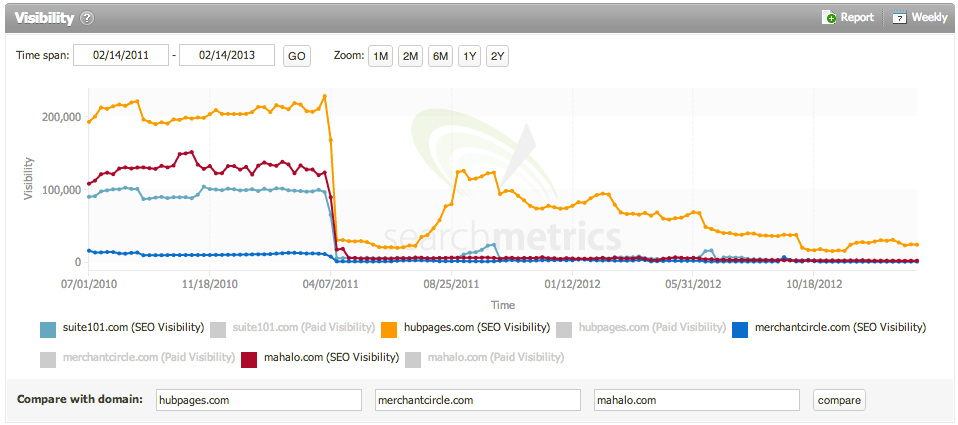
Sites such as HubPages, Suite101 and About.com lost substantial traffic and revenue. Two years on, most hadn’t recovered – Search Engine Land found that of 22 affected sites tracked, none had returned to pre-Panda visibility and only two had improved on their post-Panda position. SearchMetrics reported HubPages’ visibility sat around 62% below its pre-Panda level.
What counts as “thin” content?
Thin content is any page that offers little or no value to the reader – auto-generated text, doorway pages, duplicated content, or pages padded to look substantial without saying anything. Panda goes after this, not necessarily outright spam. Google’s own quality guidelines are the reference point for what to avoid.
Does Panda penalise a whole site or one page?
Panda applies a site-wide penalty. If Google judges that you’re hosting thin content, your entire site can be dragged down — though individual pages may still rank. This is the key structural difference from early Penguin: Panda judges the site as a whole.
What is the Google Penguin update?
Penguin is a Google algorithm update, first launched in April 2012, that targets manipulative link-building and webspam. Google described it as an algorithm change aimed at web spam, designed to reduce rankings for sites violating its quality guidelines through tactics like cloaking, keyword stuffing, and buying links.
How does Penguin judge your backlinks?
Penguin evaluates the quality of your link profile, not just the quantity. A link from a low-quality or irrelevant site (“a bad neighbourhood”) can hurt you. The authority of the domain linking to you matters more than the raw number of links. Paying $20 for 5,000 links a month is, post-Penguin, both pointless and actively dangerous.
Since Penguin launched, many top-ranking sites have been cleaning up their link profiles and cutting spammy backlinks – a shift from acquiring links at volume to earning them from credible sources.
In the case of Hubpages, SearchMetrics reported that its visibility was reduced 62 percent lower than it was before Panda.
Panda vs Penguin: the difference at a glance
- Panda → content problem. Thin, low-quality, or duplicated content. Penalty applied site-wide.
- Penguin → link problem. Manipulative link-building, spammy backlinks, keyword stuffing. Originally applied as a site-wide penalty; later became page-specific.
- Diagnosis rule of thumb: if your traffic dropped on a known Panda date, look at your content. On a known Penguin date, look at your links.
As of March 2013, Matt Cutts had announced that a major Penguin update was coming later in the year — expected to send significant ripples through the SEO industry. See what happened next ↓
Update: what happened to Panda and Penguin after 2013
This section was added during our site migration to complete the picture. Everything above reflects the SEO landscape as it stood in early 2013.
The 2013 article ended on the eve of a major Penguin release. Here’s the short version of everything that followed – and why it still matters if you’re diagnosing a ranking drop today.

Are Panda and Penguin still separate updates?
No. Both Panda and Penguin have been absorbed into Google’s core ranking algorithm and no longer run as separate, announced updates. Google folded Panda into the core algorithm in early 2016. Penguin followed with Penguin 4.0 on 23 September 2016, which integrated it into the core algorithm and made it run in real time.
What changed with Penguin 4.0 (2016)?
Two things changed that directly reverse points made in the original 2013 article:
- Penguin became real-time. Instead of waiting months for a periodic “refresh” to recover, sites now see the effect of link clean-up shortly after Google re-crawls the pages. Recovery got much faster.
- Penguin became granular. Rather than always penalising an entire site, Penguin 4.0 devalues spammy links at the page level – and where possible it simply ignores bad links rather than demoting the site. The “site-wide penalty” framing from 2013 is now largely outdated for Penguin.
Do Panda and Penguin still matter today?
Yes – as principles, not as named updates. The underlying signals are permanent parts of how Google ranks pages:
- The Panda principle: thin, low-value content still suppresses rankings. This lives on in Google’s broader quality systems and its emphasis on E-E-A-T (Experience, Expertise, Authoritativeness, Trustworthiness) and “helpful content.”
- The Penguin principle: manipulative links still hurt. Buying links or building spammy backlinks at volume remains a genuine risk, not a shortcut.
The practical takeaway hasn’t changed in over a decade: publish content worth reading, and earn links you’d be happy to show Google. Everything else is a workaround with a shelf life.
Frequently asked questions
What is the difference between Google Panda and Penguin?
Panda and Penguin are two different Google algorithm updates that penalise two different problems. Panda targets low-quality, thin content across a whole site. Penguin targets manipulative link-building, such as spammy backlinks and over-optimised anchor text. If your rankings dropped, identifying which update hit you tells you what to fix: your content or your links.
What is the Google Panda update?
Panda is a Google algorithm update, first launched on 24 February 2011, that targets low-quality and thin content. It was originally nicknamed the “farmer” update because it was built to tackle content farms – sites producing large volumes of low-value content purely to rank in search results. Panda originally applied a site-wide penalty, meaning an entire site could be dragged down for hosting thin content.
What is the Google Penguin update?
Penguin is a Google algorithm update, first launched in April 2012, that targets manipulative link-building and webspam. It reduces rankings for sites that violate Google’s quality guidelines through tactics such as cloaking, keyword stuffing, and buying links. Penguin evaluates the quality of a site’s backlink profile, not just the quantity of links.
Does Panda penalise a whole site or a single page?
Panda originally applied a site-wide penalty. If Google judged that a site hosted thin content, the entire site could be dragged down in rankings, though individual pages might still rank. This site-wide judgement was the key structural difference from early Penguin. Since 2016, Panda’s signals have been part of Google’s core algorithm rather than a separate penalty.
Are Panda and Penguin still separate Google updates?
No. Both Panda and Penguin have been absorbed into Google’s core ranking algorithm and no longer run as separate, announced updates. Google folded Panda into the core algorithm in early 2016. Penguin followed with Penguin 4.0 on 23 September 2016, which integrated it into the core algorithm and made it run in real time and at page level rather than site-wide.
Do Panda and Penguin still matter for SEO today?
Yes, as principles rather than as named updates. The Panda principle — that thin, low-value content suppresses rankings — lives on in Google’s quality systems and its emphasis on E-E-A-T and helpful content. The Penguin principle — that manipulative links cause harm — remains true, as buying or building spammy backlinks at volume is still a genuine risk. The practical takeaway is unchanged: publish content worth reading, and earn links you would be happy to show Google.
Need a diagnosis rather than a guess? CloudRock is a Singapore digital marketing agency that starts every engagement with paid discovery — we work out what’s actually wrong before recommending a fix. Book a discovery call.