Summary. PageRank is Google’s original algorithm for scoring a page’s importance by the quality and quantity of its inbound links. The public score is gone, but the algorithm lives on inside Google Search. It still matters — as one signal among many — and the principle behind it is timeless: earn high-quality, relevant links by being worth linking to. Just don’t mistake it for the goal. Traffic and revenue are the goal.
What Is PageRank?
PageRank is a Google algorithm that measures the importance of a web page based on the number and quality of links pointing to it. It treats each link as a vote of confidence: a page earning links from trusted, relevant sites is judged more important than one with few links or links from low-quality sources. It was the founding idea behind Google Search, and a version of it still runs inside the ranking system today.
That last point matters, because most of what you’ll read about PageRank is a decade out of date. Google removed the public PageRank score years ago, which led a lot of people to declare it dead. It isn’t. What died was the scoreboard — not the game.
We’ve always sat in the camp that says PageRank is worth understanding but not worth fixating on. This guide explains what it is, clears up the common myths, and tells you what actually deserves your attention instead.
How Does PageRank Work?
PageRank looks only at links — who links to a page, and how much authority those linking pages carry. It doesn’t consider on-page factors like your site structure, content quality, or page speed. Those are handled by other parts of Google’s ranking system.
The concept came from a 1998 Stanford paper by Google’s founders, Larry Page and Sergey Brin. They described it as a model of a “random surfer” — someone who lands on a page, keeps clicking links, and occasionally jumps to a random new page. The probability that this imaginary surfer ends up on any given page is that page’s PageRank. The algorithm is named after Larry Page, and the pun on “web page” was intentional.
Two things are worth getting right, because they’re the most common misunderstandings:
PageRank is calculated per page, not per site. When someone says “my website is PR5,” they usually mean the PageRank of their homepage. Every individual URL has its own value.
The original scale was logarithmic. On the old 0–10 public scale, each step up was exponentially harder to reach than the last. Moving from 3 to 4 was far easier than moving from 4 to 5. That’s why PR3 and PR4 sites were common while PR9 and PR10 sites were rare.
Links as Votes: Why Some Count More Than Others
The core insight is simple: a link to your site is a vote for your site. When another page links to yours, it’s signalling a degree of trust. When Page and Brin built this into a search engine, the results were dramatically better than the keyword-matching engines of the time, and links became the currency of the web.
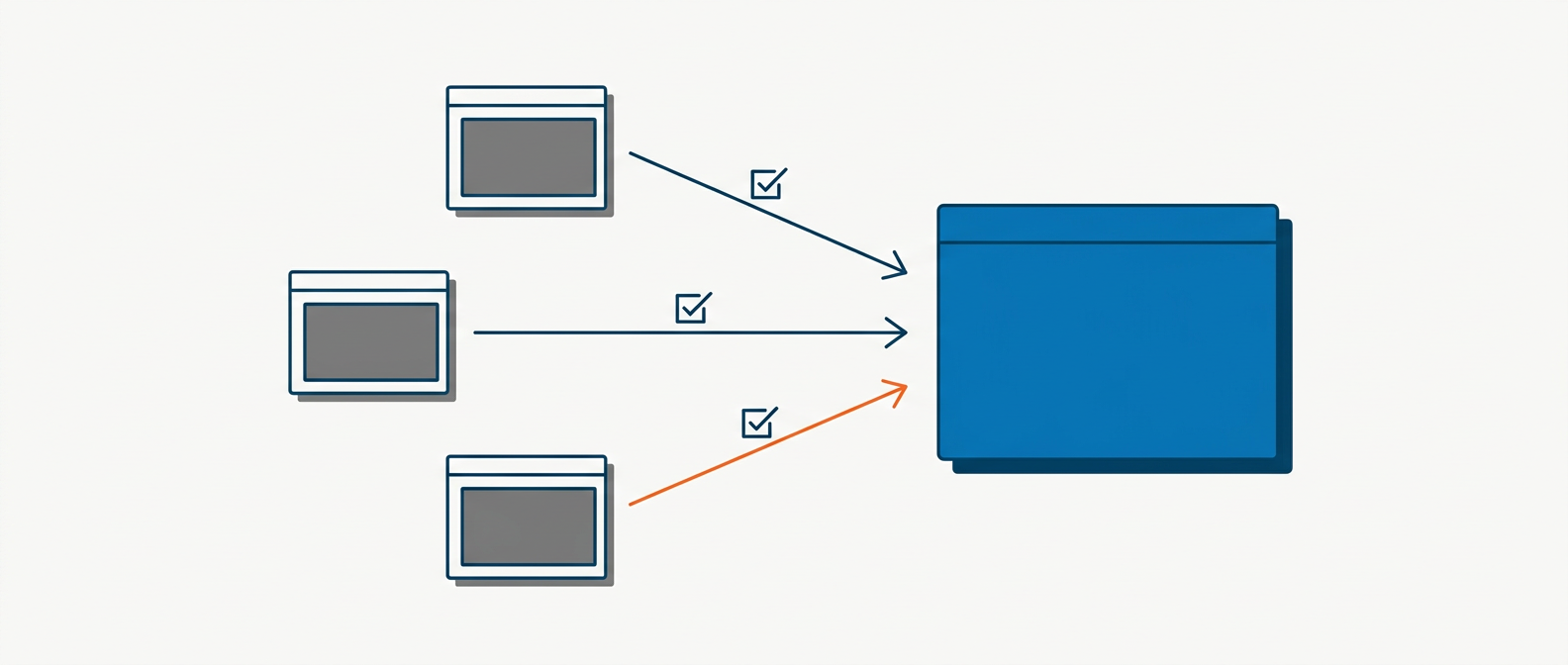
But not every vote carries equal weight. A link from a small personal blog does far less for you than a link from an established, authoritative site in your field. A handful of links from genuinely relevant, trusted sources will outperform hundreds of links from thin or unrelated sites.
This is the single most useful thing to take from PageRank: link quality beats link quantity. A page with fewer, better links can and does outrank a page with more, weaker ones.

What Happened to the PageRank Score?
Here’s where the timeline matters, because it’s the source of most of the confusion.
Google made PageRank visible through the Google Toolbar in 2000, showing every page a score from 0 to 10. SEOs became obsessed with that green bar, and an entire industry of link manipulation grew up around inflating it. So Google gradually walked it back: it stopped showing PageRank in Search Console in 2009, pushed the last public update in December 2013, and officially shut off the Toolbar score in March 2016. There is no longer any official PageRank number you can look up for your site.
That’s what led to the “PageRank is dead” headlines. But in March 2024, a large set of internal Google API documents leaked — and they showed multiple versions of PageRank still in active use, including one referred to as PageRank_NS (nearest-seed). In other words, the public score was retired; the underlying algorithm evolved and stayed at the heart of how Google evaluates links.
So the honest answer to “does PageRank still exist?” is: yes, internally. The thing that disappeared was your ability to see it.
Does PageRank Still Matter for SEO in 2025?
Yes — but not in the way people used to treat it, and not as something you can measure or optimise directly.
PageRank was never the whole picture. Google uses a large number of signals to rank a page for a given query, and link-based importance is only one of them. It sits alongside content relevance and quality, user experience signals, and the broader set of factors Google groups under E-E-A-T (Experience, Expertise, Authoritativeness, Trustworthiness). A strong link profile helps, but it won’t rescue thin content, and it isn’t a dial you can turn on demand.
There are three practical reasons not to build your strategy around PageRank:
You can’t measure it. There’s no public score anymore. If you can’t measure something with any accuracy, it’s a poor thing to optimise for. Third-party metrics like Ahrefs’ Domain Rating or Moz’s Domain Authority estimate link authority, but they’re proxies built by other companies — not Google’s actual PageRank.
It’s one signal among many. Treat a healthy PageRank as a pleasant by-product of earning good links, not a target in itself. Chase the links that come from doing genuinely useful work, and the underlying authority follows.
High authority doesn’t guarantee rankings. If raw link authority were decisive, the most-linked sites on the internet would rank for everything — and they plainly don’t. Relevance and content quality decide most queries. We’ve ranked pages for competitive terms on brand-new sites with no established authority at all, because the page was the better answer.
What to Track Instead
If PageRank isn’t the metric, what is? The two that actually run a business:
Traffic and revenue. Qualified visitors and the enquiries or sales they turn into. That’s the point of the exercise. Everything else is a means to that end.
Rankings, links, and authority all feed into those outcomes — but they’re inputs, not the scoreboard. A page that ranks well and converts poorly isn’t winning. Keep your eye on the numbers that pay for the work.
And a word of caution: be sceptical of any agency or consultant still selling PageRank as a headline metric in 2025. It’s usually a sign of surface-level knowledge — PageRank is one of the first terms a new SEO learns, and leaning on it tends to signal someone who knows just enough to be dangerous with your budget.
Frequently-asked Questions
Is PageRank still used in 2025? Yes. Google removed the public PageRank score from its Toolbar in 2016, but the algorithm itself is still used internally. Google API documents that leaked in 2024 revealed several versions of PageRank still in active use.
What is a good PageRank score? There’s no longer a public PageRank score to check, so there’s no target number to aim for. The old 0–10 Toolbar scale was retired in 2016. SEOs now use third-party proxies like Domain Rating or Domain Authority to estimate link strength, but these are not Google’s actual PageRank.
Is PageRank calculated per page or per website? Per page. Every individual URL has its own PageRank. When people refer to “a site’s PageRank,” they usually mean the score of its homepage.
What’s the difference between PageRank and Domain Authority? PageRank is Google’s own internal link algorithm, and its score is no longer public. Domain Authority is a third-party metric created by Moz that estimates a site’s ranking strength. They measure related ideas, but Domain Authority is an approximation built by another company, not a reading of Google’s real PageRank.
Does PageRank consider on-page factors like content or speed? No. PageRank only evaluates links — how many point to a page and how authoritative those linking pages are. Content quality, site structure, and page speed are assessed by other parts of Google’s ranking system.