Somewhere in a B2B marketing meeting this quarter, someone is going to say the words “we’re not really a social media kind of business.” Usually it is said about a company that sells to other companies: industrial parts, enterprise software, logistics, ingredients. The unspoken logic is that social media is for sneakers and skincare, and that a firm selling turbines has nothing to post.
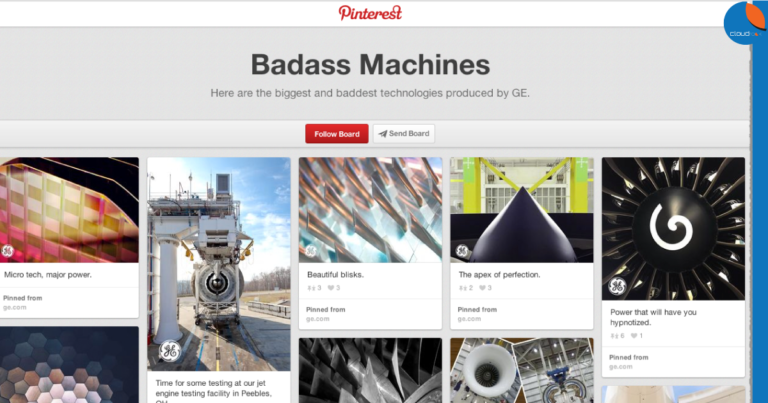
General Electric spent the better part of a decade proving that logic wrong. GE sold jet engines, wind turbines, and hospital scanners, roughly the least Instagrammable catalogue imaginable, and became one of the most awarded brands in B2B social media while doing it. This GE B2B social media case study looks at what the company actually did, what has happened to it since, and the part that matters most: what a Singapore B2B, FMCG, or F&B business can copy without a Fortune 500 budget.
One thing to get out of the way first, because it changes how you should read the rest.
Is this GE the same company today?
No. The General Electric conglomerate no longer exists. On 2 April 2024 it completed a three-way split into GE Aerospace, GE Vernova (energy), and GE HealthCare, ending more than a century as a single company.
According to CNBC, the break-up marked the end of a corporate structure that dominated American business for decades. GE HealthCare had already spun off in January 2023; GE Vernova followed in April 2024, leaving GE Aerospace as the continuing entity under the historic ticker.
That matters here for one reason. The social media playbook in this case study was built between roughly 2013 and 2018, when GE was still one company trying to make an unglamorous industrial portfolio feel human. The company that ran those campaigns has been restructured out of existence. The playbook itself has aged far better than the org chart, which is exactly why it is still taught. We are studying the method, not recommending you buy the stock.
What did GE actually do on social media?
GE built its social presence around a single idea: make a B2B company feel human by championing science and wonder rather than selling products. The metric that mattered was engagement and conversation, not direct sales.
The challenge GE faced is the same one most B2B brands face. When your products are jet engines and gas turbines, the average person cannot picture what you make or why they should care. GE’s answer, documented in its Shorty Award profile, was to reframe the whole company: from “the people who make appliances” to “thought leaders in advanced technology.” The brand set out to create engaging content daily, run a user-generated campaign monthly, and experiment with a new platform yearly.
Linda Boff, who ran GE’s brand marketing through this period and later became its Chief Marketing Officer, framed the goal plainly in an interview with Digiday: GE wanted conversations with the people who shared its passions, and looked for the richest, most accessible way to tell its story. Note what is missing from that sentence. There is no product, no spec sheet, and no call to buy anything.
What is emotional equity, and why did GE chase it?
Emotional equity is the store of trust and affinity a brand builds by connecting with people before they are ready to buy, so that the brand is the one they remember when they finally are. GE treated this as the entire point of social media.
This sounds soft until you look at the evidence behind it. According to the CEB and Google study “From Promotion to Emotion”, B2B buyers are considerably more emotionally connected to their suppliers than consumers are to the brands they buy, and personal value drives B2B purchase far harder than business value does. The reassurance of having chosen well, the reduced career risk, the confidence of backing a name people respect: those feelings close B2B deals. The spec sheet, the thing most B2B marketing pours itself into, moves almost nobody.
There is a second body of research that explains why GE spent so heavily on people who were not buying anything. The LinkedIn B2B Institute, working with Professor John Dawes of the Ehrenberg-Bass Institute, established what is now called the 95-5 rule: at any given moment, only about 5% of business buyers are in the market to buy, and 95% are not. You cannot persuade the 95% to buy today, because they already have what you sell or are locked into a contract. You can only make sure that when they do enter the market, yours is the brand that comes to mind.
GE’s daily science content was not a distraction from selling turbines. It was the mechanism that kept GE mentally available to a buying committee that might not issue a purchase order for another three years.
How did the GE moon boot campaign work?
GE’s most-quoted campaign turned an industrial materials story into a pair of sneakers. To mark the 45th anniversary of the first Moon landing, GE partnered with JackThreads and Android Homme on a limited run of “Missions” moon boot sneakers, built using the advanced materials GE develops for jet engines and turbines.
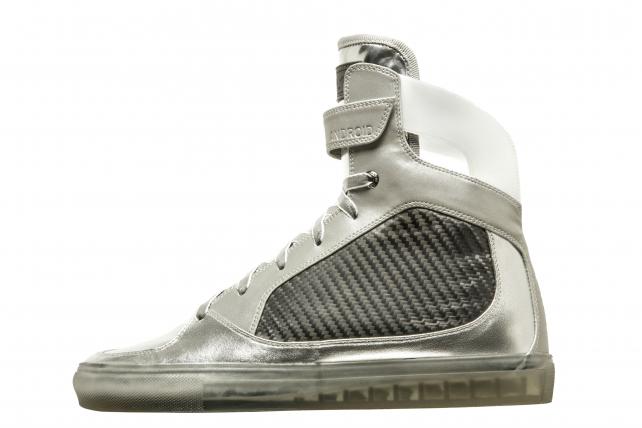
GE does not make footwear. That was the point. GE did supply materials used in the boots and helmets worn by Buzz Aldrin, Neil Armstrong, and Michael Collins in 1969, so the sneaker was a nod to a real contribution to a moment everyone remembers. The average person will never care about the properties of a superalloy used in a turbine blade. A limited-edition sneaker made from that same superalloy is genuinely cool.
The campaign did the hardest job in B2B marketing: it made an abstract capability tangible. It used the product itself as the story, tied the modern GE back to its place in history, and, as a bonus, marked GE’s debut on Snapchat. The lesson is not “make sneakers.” It is: find the one place your unglamorous capability touches something people already love.
What was GE’s #6SecondScience campaign?
#6SecondScience was a user-generated video campaign in which GE invited people to share tiny science experiments, and it became one of the most successful B2B social campaigns of its era on almost no budget. It ran on Vine, the now-defunct six-second video app.
The mechanics were simple. GE had been posting short science clips for months, then in August 2013 turned it into a campaign with a question: how much science can you fit into six seconds? According to Media Logic, more than 400 videos were submitted in a week, from photosynthesis to rocket science, with contributions from GE, ordinary Vine users, and a handful of paid influencers. The best clips were collected on a Tumblr hub and reshared on Facebook and Twitter.
GE’s most-watched clip, showing what happens when you mix milk, food colouring, and dish soap, reportedly passed 21 million loops. There was no prize and no cash reward, which is the detail worth sitting with: a strong creative premise generated the response, not a giveaway. The campaign also ran during the back-to-school season, when science was already on people’s minds. Good timing, a genuinely interesting idea, and near-zero media spend.
Vine is gone, but the format is not. Six-second experiment videos are now short-form vertical video, and short-form video is the single most effective B2B content format today.
Does GE’s playbook still work in 2026?
Yes, and the current data supports it more strongly than it did when GE ran these campaigns. Every principle GE relied on is now backed by benchmark research, and the platforms have moved in GE’s direction.
Start with video. According to the LinkedIn B2B Marketing Benchmark, 78% of B2B marketers now use video, and short-form is the format most cite as delivering the highest return. GE was making six-second science videos in 2013. The rest of B2B has spent a decade catching up to the format.
Emotion has held up too. According to Marketing Week, most B2B creative still fails to register emotionally or leave a lasting impression, which means the brands that do connect emotionally stand out even more than they did in GE’s day. The research from LinkedIn’s B2B Institute and System1 continues to show that emotional advertising cuts through with both in-market and out-of-market buyers.
And the trust picture has shifted in a way GE would recognise. B2B buyers increasingly trust people over brands and peer discussion over polished corporate posts. Employee-shared content earns markedly more engagement than the same message from a brand account, and buyers now weave Reddit threads, LinkedIn commentary, and AI-tool answers into their research long before they speak to a salesperson. GE’s instinct, to be human and useful rather than promotional, is now table stakes.
How can a Singapore business apply the GE playbook?
A Singapore FMCG, F&B, or B2B business can apply GE’s approach without GE’s budget by copying the method rather than the scale: pick one human idea, commit to a regular content rhythm, and measure attention rather than immediate sales. The constraint is discipline, not money.
Here is how the GE principles translate for a smaller business operating in the Singapore market.
- Find your Super Material. Every business has one capability or detail that touches something people already care about. A specialty food manufacturer has the origin story of a single ingredient. A logistics firm has the genuinely interesting problem of moving something impossible across a port. Lead with that, not the product catalogue.
- Commit to a rhythm you can actually keep. GE’s “daily content, monthly campaign, yearly new platform” cadence worked because it was a system, not a burst. For a smaller team, posting well two or three times a week beats a heroic month followed by silence. Consistency is what builds the mental availability the 95-5 rule describes.
- Put your people on camera. Employee-shared and founder-led content consistently outperforms brand-account posts on engagement and trust. In a compliance-sensitive market, keep the substance clear and correct, then let real people say it in their own voice.
- Measure attention, then track it to pipeline. GE measured engagement, not sales, on purpose. That is right for the top of the funnel, but a smaller business cannot stop there. Watch reach, saved posts, and branded search over time, then use a proper attribution model to connect that attention to enquiries. The Content Marketing Institute reports that conversions are the top metric for most B2B content marketers, so the brand work has to eventually show up in the pipeline.
- Do not chase virality with a prize. #6SecondScience worked with no giveaway. A gift-card competition buys you entrants who want the gift card and vanish. A genuinely interesting idea buys you the right audience.
None of this requires a superalloy or a Moon landing. It requires deciding that your business is worth being curious about, and then being disciplined enough to show up.
When does the GE approach not fit?
The GE playbook is a poor fit for a business that needs sales this quarter and has no budget for anything else. It is a brand-building strategy, and brand building pays out over months and years, not weeks.
This is the honest trade-off. If you are a startup that has to close ten deals in the next 60 days to make payroll, pouring your entire effort into daily wonder-content is the wrong call. That situation needs demand capture: search ads, bottom-of-funnel content, and direct outreach aimed at the 5% who are in-market right now. Binet and Field’s work, and the LinkedIn B2B Institute’s adaptation of it, suggests B2B brands do best with a roughly even split between brand building and sales activation, not all of one or the other.
The mistake GE’s imitators make is treating brand content as a substitute for a sales engine rather than the layer that makes the sales engine more efficient. GE could afford to measure conversation instead of sales because GE already had a sales machine underneath. A smaller business needs both running at once. Build the memory and capture the demand, and be honest with yourself about which one your business needs more of this quarter.
Working out that balance, for your market, your buying cycle, and your budget, is the actual strategy work. It is also the part most agencies skip because it is harder than posting. If you want a straight answer about where your social media effort should sit between brand building and demand capture, that is a conversation worth having before you spend another dollar on content.
Frequently asked questions
What is the GE B2B social media case study about?
It examines how General Electric, a B2B company selling jet engines, turbines, and medical equipment, became one of the most awarded brands in social media by championing science and wonder rather than selling products. The core lesson is that emotional connection and consistent, human content build the brand recognition that drives B2B purchases, even for unglamorous industrial products. The case study is drawn from campaigns GE ran between roughly 2013 and 2018.
Is General Electric still one company?
No. General Electric split into three separate public companies, completing the process on 2 April 2024: GE Aerospace, GE Vernova, and GE HealthCare. GE HealthCare spun off first in January 2023, followed by GE Vernova in April 2024. The social media playbook in this case study predates the split and was built when GE was still a single conglomerate.
Why does GE’s social media strategy still matter for B2B marketing in 2026?
Because every principle GE relied on is now backed by current research. Short-form video, which GE pioneered with six-second science clips, is the highest-return B2B content format today according to the LinkedIn B2B Marketing Benchmark. The 95-5 rule confirms that most B2B buyers are not in-market at any given moment, so the brand-building GE did is what keeps a company top of mind for future purchases.
Can a small Singapore business copy GE’s social media approach?
Yes, by copying the method rather than the budget. Find the one capability or story that touches something people already care about, commit to a content rhythm you can sustain, put real people on camera, and measure attention before sales. A smaller business should pair this brand-building work with demand-capture activity aimed at buyers who are ready to purchase now, rather than relying on brand content alone.
What was GE’s #6SecondScience campaign?
#6SecondScience was a user-generated video campaign GE ran on Vine in August 2013, inviting people to share six-second science experiments. More than 400 videos were submitted in a week with no prize offered, and GE’s most popular clip reportedly passed 21 million views. It demonstrated that a strong creative idea can generate a major response without a giveaway or a large media budget.