Somewhere in a shared drive right now is a slide titled “Our Target Customer.” It says something like “professional women, 25 to 45, Singapore, mid to high income.” Everyone in the room nodded when it went up. Nobody has looked at it since.
That slide is why your marketing feels like shouting into a room where no one turns around. Marketing to a demographic means marketing to no one in particular, and buyers can tell. A buyer persona fixes that by turning “women 25 to 45” into a specific person with a job, a problem, and a reason to care.
This guide covers what buyer personas are, where they came from, the four misconceptions that quietly ruin them, and the benefits they deliver for FMCG, F&B, and B2B businesses in Singapore. Building personas is one of the first things we do with our social media and content marketing clients, because you cannot write persuasively for someone you have not bothered to define.
What Is a Buyer Persona?
A buyer persona is a research-based, semi-fictional profile of your ideal customer, describing who they are, what they want, what stops them, and how they decide to buy. It is built from real data about your existing customers, not invented in a meeting.
The word “semi-fictional” is doing quiet, load-bearing work. The persona is a composite character, a stand-in for a real segment of your audience, but every trait in a real persona traces back to evidence: customer interviews, sales conversations, analytics, survey data. Skip the evidence and you have a character sheet, not a persona.
A complete persona captures five things:
- Demographics: role, seniority, age, location, income.
- Psychographics: values, motivations, attitudes, what they care about.
- Goals: what they are trying to achieve, professionally and personally.
- Pain points: the problems they need solved and the obstacles in the way.
- Buying behaviour: how they research, who influences them, what triggers a purchase.
The difference between a good persona and a useless one is the “why” behind the behaviour, not the “what.” Age and postcode tell you nothing about why a deal stalls or why a shopper picks the competitor. Triggers, objections, and decision criteria do. According to HubSpot, 71% of companies that exceed their revenue goals have documented buyer personas, and the ones that work are the ones grounded in that “why.”
Personas go by other names: marketing personas, customer personas, audience personas. Same tool, different labels.
How Is a Buyer Persona Different From an Ideal Customer Profile?
An ideal customer profile describes the company; a buyer persona describes the human inside it. The two get used interchangeably, and they should not be.
Your ICP is firmographic. It names the type of organisation most likely to buy from you: industry, company size, revenue band, location. For a B2B agency in Singapore, an ICP might read “F&B brands doing S$5M to S$50M in revenue with no in-house marketing lead.” Useful for deciding which accounts to chase.
A buyer persona sits one level down. It describes the marketing manager, the founder, or the finance director inside that company, the person who actually makes or blocks the decision. You need both: the ICP tells you which doors to knock on, the persona tells you what to say when someone answers.
Where Did Buyer Personas Come From?
Buyer personas were invented by software designer Alan Cooper, who built the first one, “Kathy,” around 1983, decades before marketers borrowed the tool. He created it to solve a design problem, not a marketing one.
The origin is more human than most origin stories. While writing a project-management program, Cooper interviewed a woman named Kathy who worked at an advertising firm and whose job was making sure staff were used to their full capacity. His early-1980s computer took an hour to compile code, so he would walk a nearby golf course to kill time, running imaginary conversations with Kathy in his head, letting her request features based on her needs. According to MediaPost’s account, that internal dialogue was his way of getting out of his own head and into a customer’s. Kathy became the composite user he designed the software around.
The method got rigorous later. Consulting for the business-intelligence firm Sagent Technologies in 1995, Cooper kept hitting a wall with the engineers. When he asked how their software would be used, the answer was always some version of “well, someone could do anything.” Everything was possible, so nothing was specific, and the interface pleased no one. So he interviewed Sagent’s actual users, found they clustered into three distinct groups by goals and skill, and built three personas: Chuck, Cynthia, and Rob. In his own words in The Origin of Personas, these were the first true goal-directed personas.
Personas work because they were forged solving a real problem in the field, not theorised in a lecture hall. Marketers adopted them for the same reason. Faced with more channels, formats, and decisions than any human can hold in their head, a persona is one of the few tools that cuts the noise and points a whole team at the same customer.
What Does a Buyer Persona Actually Look Like?
A useful persona reads like a character sketch with receipts, not a demographic bullet list. The gap between the two is the whole game. Here is what most companies hand us when we ask who their customer is:
“We want to target professional women aged 24 to 45 living in Singapore.”
For B2B it somehow gets vaguer. “We want to target SMEs.” That is not a customer. That is a census category.
Now compare a persona built the same afternoon, for a real Singapore context:
“Marketing Manager Mei” is a 34-year-old marketing lead at a mid-sized Singapore F&B brand. She owns campaign performance but has no in-house specialists, so she outsources execution and lives in fear of hiring the wrong agency again. She is measured on ROI and has to defend every dollar to a cost-focused managing director who still thinks marketing means a Facebook page. She trusts case studies and peer recommendations over sales decks, does most of her vendor research on LinkedIn, and will not fill in a contact form until she is fairly sure you are worth the call.
The second version tells you what to write, where to publish it, and which objection to answer first. Mei tells you to lead with proof, publish on LinkedIn, and address the “how do I justify this to my MD” problem on the page. “Women 24 to 45” tells you to guess.
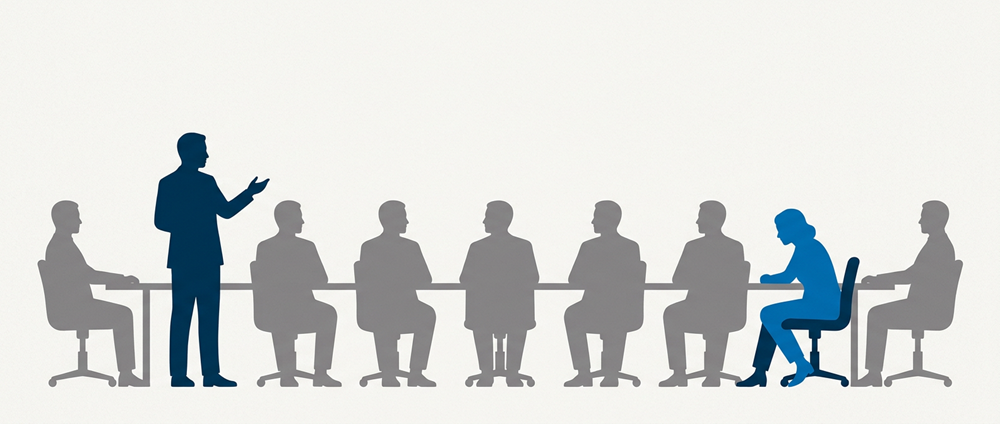
This format is not a CloudRock invention. Government agencies and global brands publish personas in exactly this shape. The US Department of Health and Human Services, Dolby, and GoDaddy have all released detailed public examples built on the same spine of name, goals, and pain points. One caution worth keeping: the cute name and the hobbies are the least important part, and over-investing in them is how personas drift into fiction. Name the persona so the team can talk about it, then spend your energy on the decision criteria.
What Are the Common Misconceptions About Buyer Personas?
The most damaging mistake is treating personas as a creative writing exercise rather than a research one. Four misconceptions do the most harm, and each one quietly turns a persona into a liability.
Do You Need Real Data, or Can You Just Imagine It?
A persona built without research is worse than no persona at all, because it gives false confidence. This is the big one. Practitioners on r/b2bmarketing have a name for the invented kind: “fairytale personas,” B2C-style profiles drawn up in a workshop, printed on a one-pager, and quietly ignored because nobody on the sales floor believes them.
Real personas need real inputs: interviews with current customers, insight from your sales team, website and social analytics, survey responses. Interview 8 to 12 people per persona, the point where patterns stop changing. Building personas in a vacuum is a disaster waiting to happen, and no amount of confident formatting saves one built on guesswork.
Do Buyer Personas Work for B2B, or Only B2C?
Personas are just as valuable in B2B, with one difference: you build one for each member of the buying committee. The assumption that personas are a B2C toy is why a lot of B2B marketing misfires.
Most B2B purchases are made collaboratively. A technical evaluator, a budget holder, and an end user might all shape a single decision, and the message that convinces the finance director is not the one that convinces the person who will use the service daily. We build a separate persona for each role in the Decision-Making Unit. According to Prospeo’s analysis, 70% of companies that miss revenue goals fail to account for the full buying committee, sending the same message to the CTO and the end user and then wondering why deals stall. One “decision-maker” persona ignores the buying group and addresses the wrong objection to the wrong role.
Is a Persona the Same as Your Brand Personality?
Your persona is your customer; your brand personality is your voice. They are not the same thing. This confusion is more common than it should be. We once presented a set of personas to a client who assumed they described the brand’s own character.
The distinction is simple once stated. A brand has one personality. It can have several personas, one for each type of customer it serves. Blur the two and your messaging collapses: you end up writing in your customer’s voice instead of your own, or building a brand around traits your buyers do not actually have.
Are Personas Ever “Finished”?
A persona is never done, because your customers never stop changing. Treating it as a one-time deliverable is how it rots.
Buying criteria shift, new competitors appear, and last year’s winning angle goes flat. A persona built in 2023 is a liability in 2026 if nobody has touched it. The fix is governance, not effort: assign an owner, run a light quarterly review, and do a proper refresh with fresh interviews once a year. Only 44% of teams update their personas annually, according to The Starr Conspiracy’s benchmark data, which is precisely why most personas quietly stop reflecting reality.
What Are the Benefits of Buyer Personas?
Buyer personas sharpen five things: your messaging, your strategy, your team’s alignment, your content, and your ability to make and defend decisions. Every benefit traces back to the same root. You finally know who you are talking to.
They Strengthen Your Messaging
When you know your persona, you change the angle without changing the message. The core stays constant; the emphasis shifts by audience.
A real CloudRock example. Like many businesses in Singapore, we work with family-owned companies where the founder and the next generation are both in the room. Our core message to both, that we are trusted specialists in our field, never changes. But with a 60-year-old founder we spend more time on why digital marketing matters at all and what competitors are already doing. With the 30-year-old heir apparent we go straight to process, tactics, and the latest developments. Same message, different entry point, because the personas are different. Persona-based email alone lifts click-through rates by 14% and conversions by 10%, according to figures compiled by protocol80.
They Inform Marketing and Sales Strategy
Understanding how your customer buys tells you what content to make, where to put it, and when they need it. Buying behaviour changes fast, and the speed is the problem: you think you have it figured out, then the criteria move.
Regular persona research keeps your strategy anchored to how people actually decide. When you know which channels a persona uses and which formats they trust, you stop funding campaigns that reach the wrong people, which is why personalisation cuts marketing and sales costs by 10 to 20%. The framework worth borrowing here is jobs-to-be-done, popularised by Clayton Christensen, which reframes research around what the buyer is trying to accomplish rather than who they are on paper.
They Create a Common Language Across Teams
When everyone knows who the personas are, sales and marketing stop arguing about who the customer is. Consistent delivery gets easier at both the front line and the strategy table.
A shared persona is a shared definition. It gives sales, marketing, product, and service the same reference point, the same language, and the same understanding of what the customer is trying to achieve. According to Salesforce, this shared understanding is one of the main drivers of the sales and marketing alignment that separates high-performing revenue teams from the rest.
They Help You Create the Right Content
When you understand the problem your customer is solving, you write content they find useful instead of content that only sells. The old writing adage applies: write as if you are writing for one person. A persona gives you that one person.
This is where persona work pays off most visibly. Content built for a specific persona’s actual questions gets read, shared, and cited; generic content built to chase clicks gets skimmed and forgotten. 75% of B2B buyers say the winning vendor’s content significantly shaped their decision, per the benchmarks gathered by protocol80. Content that speaks to the wrong person is not cheaper to produce than content that speaks to the right one. It just works less.
They Help You Make and Defend Decisions
Personas break decision deadlock by turning scattered evidence into one shared reference point. Inertia is a powerful force. Handed incomplete data from a dozen sources, most marketing leaders default to making no decision at all, a pattern well documented as analysis paralysis.
A persona crystallises what you know into something a team can point at, so you can see which buyer scenarios are common and which are edge cases. And when a decision gets questioned, you defend it with the research behind the persona, not an opinion. That is the difference between “I think our customers prefer this” and “here is what fourteen of them told us,” which is also the difference between getting budget signed off and getting it queried.
When Are Buyer Personas Not Worth the Effort?
Buyer personas are not always the right first move, and pretending otherwise wastes your money. A tool this useful attracts overuse, so here is the honest boundary.
If you are pre-launch with no customers, no sales conversations, and no analytics, you have nothing real to build a persona from. Start with market research and a rough ICP, then develop personas once you have actual buyers to interview. If your average deal size is small and you sell on price alone, one well-built persona is plenty, and a wall of them is just collateral nobody will use. Over-segmentation is a real failure mode: teams that build fifteen personas typically activate zero.
Personas also deliver less for a genuine commodity sold purely on being cheapest, where decision criteria collapse to a single number. That is a narrow set of businesses, but it is fair to name it. For most FMCG, F&B, and B2B companies in Singapore competing on brand, relationship, or expertise rather than raw price, the effort pays off. The tool has limits, and a persona built on thin or imagined data will mislead you more confidently than no persona at all.
Done Right, Buyer Personas Change How You Market
Buyer personas take real time and real interviews to build, which is exactly why so many companies skip the step and keep marketing to a census category. Done properly, a persona is one of the most useful tools you have for competing on something better than price.
If you want help building personas that hold up, grounded in interviews and data rather than a workshop and a stock photo, that is one of the first things we do with our content marketing and social media clients. Get in touch and we will talk through where your customer understanding actually stands today.
Frequently Asked Questions
What is a buyer persona in simple terms?
A buyer persona is a research-based profile of your ideal customer that describes who they are, what they want, what problems they face, and how they make buying decisions. It is semi-fictional, a composite character, but every detail comes from real data about your existing customers rather than guesswork. Think of it as turning “women 25 to 45” into one specific person you can actually write for.
What is the difference between a buyer persona and a target audience?
A target audience is a broad group defined mainly by demographics, such as “women aged 25 to 45 in Singapore.” A buyer persona goes deeper, giving that audience a specific character with goals, motivations, pain points, and buying behaviour. The target audience tells you roughly who; the buyer persona tells you why they buy and how to reach them.
How many buyer personas should a business have?
Most businesses need between one and five buyer personas to start, and three to five typically account for over 90% of a company’s sales. Too few and you miss meaningful differences between customer types; too many and nobody remembers or uses them. B2B companies often need one persona per role in the buying committee, since purchases are usually made by several people rather than one.
Do buyer personas work for B2B companies?
Yes. Buyer personas are highly effective for B2B, with one key difference from B2C: you build a separate persona for each member of the Decision-Making Unit. Because most B2B purchases are collaborative, the message that convinces the budget holder differs from the one that convinces the technical evaluator or the end user. Skipping this is why many B2B deals stall.
What data do you need to create a buyer persona?
You need a mix of qualitative and quantitative data: interviews with current customers, insight from your sales team, website and social analytics, and survey responses. The strongest personas draw on conversations with 8 to 12 recent buyers per persona about how they actually made their decision. A persona built without real data will mislead you, so gather evidence before you write anything down.